
Wilting Chillies
Concerned about wilting chillies? Are you giving your chillies enough water? How often should you water your chillies? What causes chili plants to suddenly wilt? These are some of the questions I’ll attempt to answer in this post.
Occasionally, chillies wilt because they’re baking in the hot sun. If you’re watering your plants sufficiently, the cause is likely fungal wilt. Wilting Chillies can be caused by either fusarium or verticillium wilt, but the two cause such similar symptoms that distinguishing between them often requires a laboratory evaluation.
While you’re questioning what causes wilting chillies, take a careful look at the environment. Are your chillies getting enough water? Have there been many hot, dry winds lately? You may simply need to increase watering.
A chilli plant that is wilting from lack of water will recover quickly. I recommend mixing up some good liquid fertiliser and giving your wilting chilli plants a good drink. They should bounce back to life within a few hours.
If your chillies are wilting suddenly, developing large yellow areas and drooping (particularly if this starts on the bottom leaves and moves upward) despite sufficient watering, fungal wilt is probably to blame. Spotted wilt virus is a less common cause of wilted pepper plants, but if your plant’s leaves are dotted with brown or black spots or unusual yellow lines or circles and the symptoms move through the plant from the top down, it is very likely the cause.
Occasionally, bacterial pepper wilt may affect your plants. Pepper plants will wilt and die quickly and upon inspection, the inner stems may be dark, watery and hollow.
Sadly, both fungal wilts and plant viruses are incurable, but the methods of prevention are very different, making proper identification vital. Once you’ve removed the plant and destroyed it, you’ll need to take some precautions to ensure that the disease doesn’t spread or reappear next season.
Fungal wilts are soil-borne and can live in the soil for many years. Long crop rotations may be able to kill the fusarium and verticillium pathogens, but it will take time before planting in the old location is safe again. Choose a new garden location and keep it free of fungus by increasing drainage and only watering when the top two inches of soil feel dry to the touch.
Spotted wilt virus is spread by thrips, tiny insects that may set up shop in the weeds around your plants. Keep weeds trimmed and use reflective mulch whenever possible.
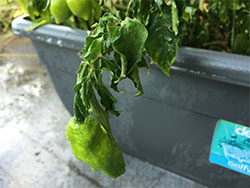
The first hour
As you can see in this photo the plant is very wilted. I mixed up 5 litres of liquid fertiliser and applied the full 5 litres to the wilting chilli.
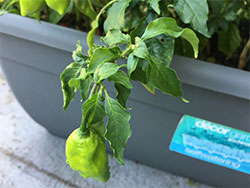
3 hours later
As you can see the chilli plant is recovering nicely. The plant is still sitting in the sun, I live in Queensland so the sun can be very aggressive. I gave this chilli an additional 3 litres of water.
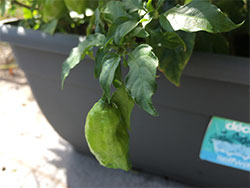
6 hours later
As you can see this chilli plant has almost fully recovered from dehydration. On a side note the liquid fertiliser helped in ripening most of the pods that where on this particular plant. I am going to repeat this test and see if I can repeat the results.